
product · Sept – Dec 2024
ECO-SENTINEL: an acoustic wildlife monitor
An acoustic monitor to help count the endangered capercaillie, developed with the Swiss Ornithological Institute and rangers of the Haute Chaîne du Jura.
Project details
-
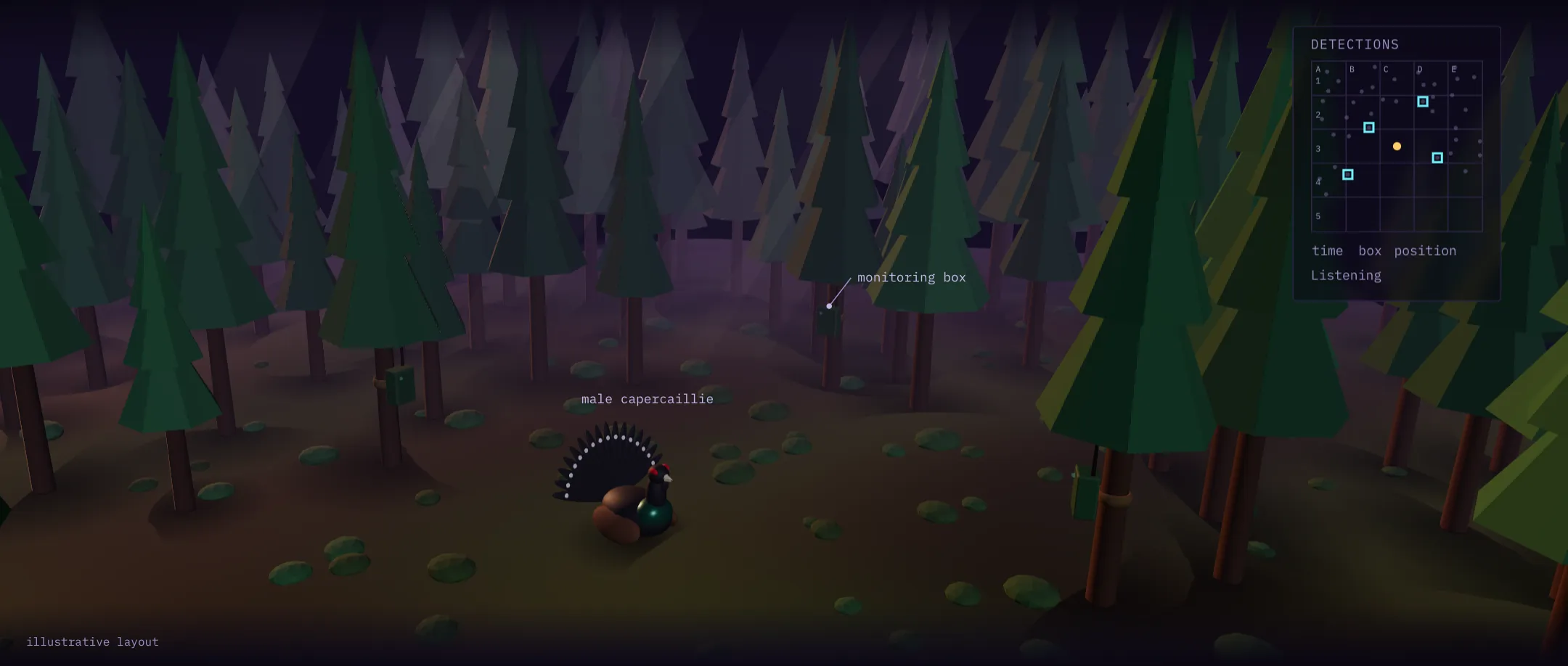
Monitoring the endangered capercaillie
The capercaillie, or grand tétras, is an endangered forest bird. The project presentation reports a 75 % decline in France. In the Haute Chaîne du Jura, reserve rangers and the Swiss Ornithological Institute monitor the population. During the survey season, rangers camp in the mountains two days a week to listen for calls.
-
Estimating the population from calls
Rangers record the place and time of each call, then compare their observations to avoid counting the same bird several times. The birds sing for about one month each year, during the same period. Two days a week of listening covers only part of that month.
-
An autonomous acoustic monitoring unit
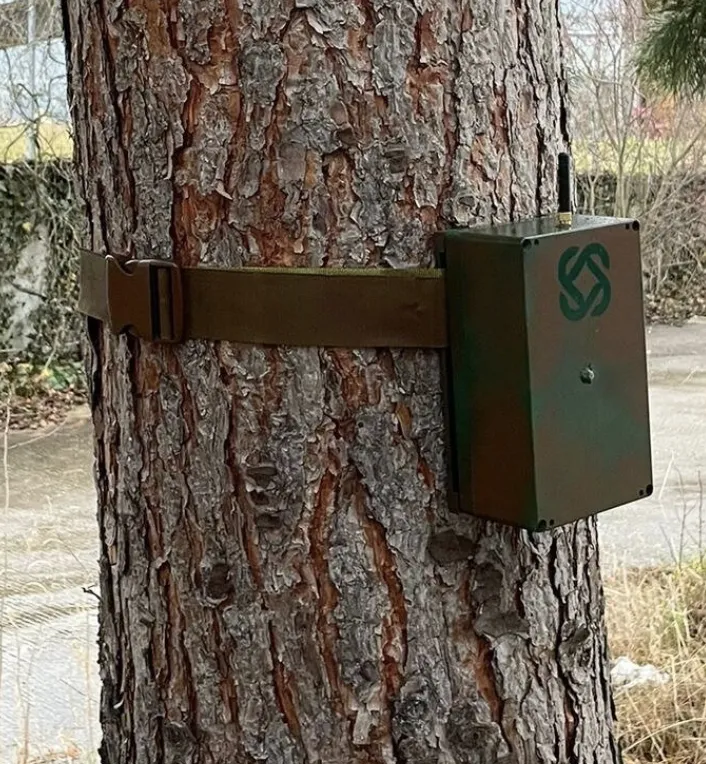
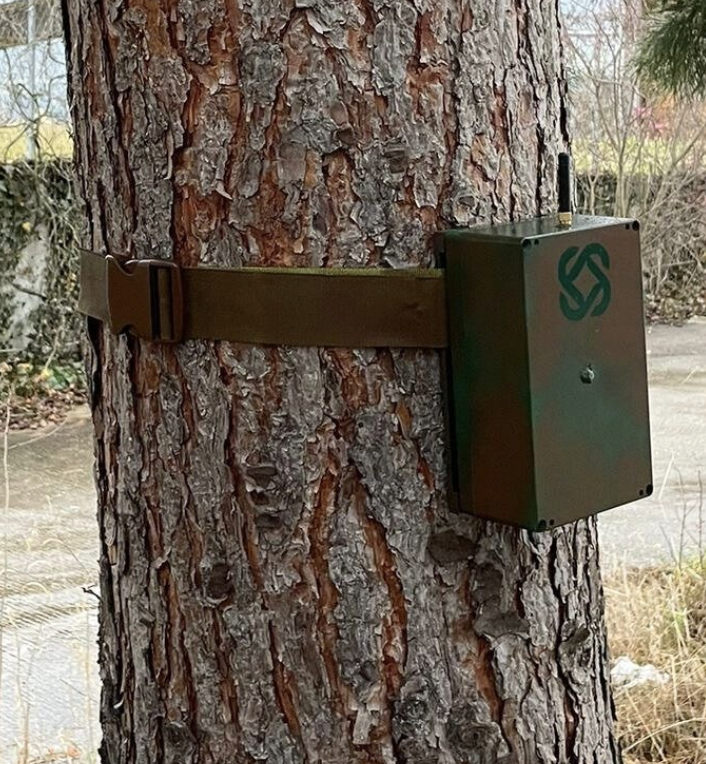
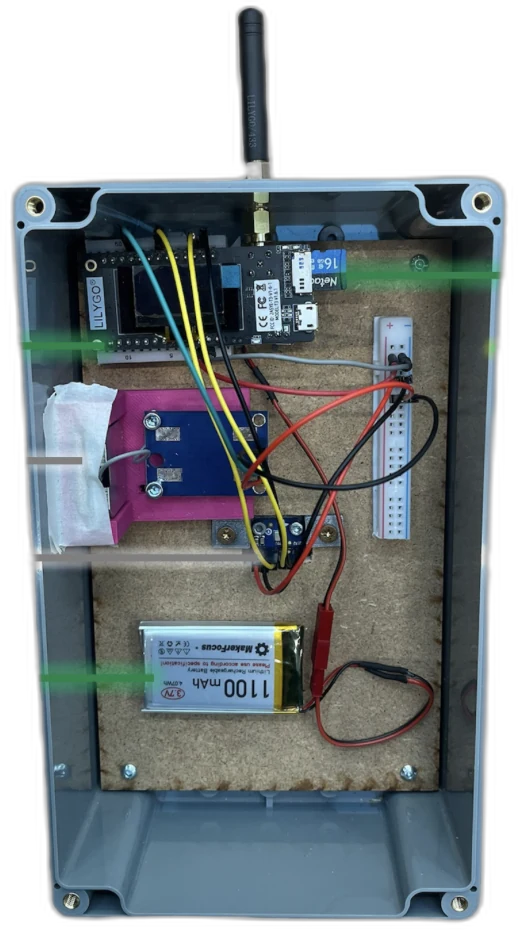
Our six-person team built units that attach to trees, recognise capercaillie calls and timestamp detections using GPS. Comparing detections across places and times lets the same cross-check run over the whole singing month, without anyone walking in. I was responsible for the electronics and detection approach. The photograph shows a unit deployed for the field test.
-
Call classification and LoRa transmission
86.6 % of male calls recognised in testing
The microphone records sound, an embedded classifier identifies male capercaillie calls, and the device sends detections over LoRa. It does not transmit the audio. On the report’s test set, it recognised 86.6 % of male calls, with a 2.1 % false-positive rate on noise. The report does not document the radio range.
-
Electronics and energy budget
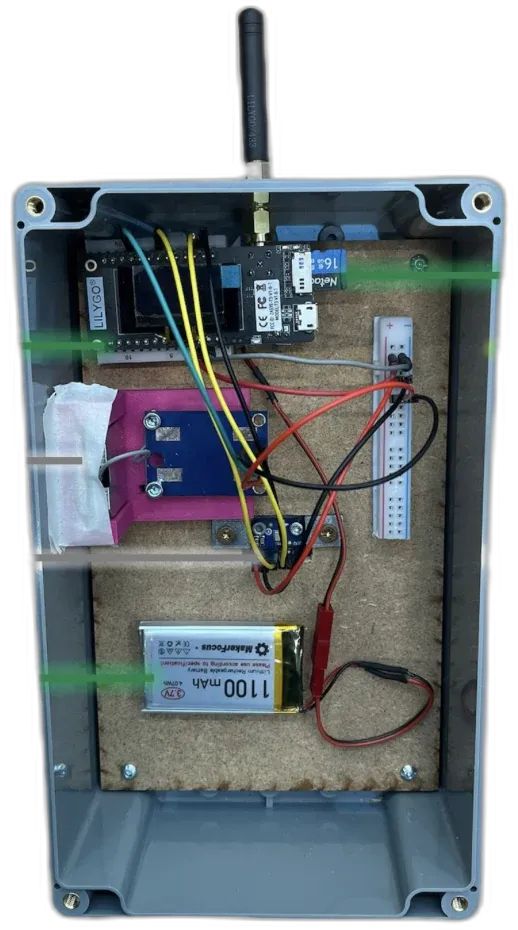
The unit contains a controller board, radio and antenna, microphone, GPS, storage and a 1,100 mAh battery. Power drove the choice of platform: a unit that has to be visited to recharge brings people back into the habitat, which is exactly what it was built to avoid.
-
Battery-life estimates and prototype measurements
4 days measured · 30 days required
The report estimates about one month of operation for a mostly sleeping ESP32 on a 10,000 mAh battery. A Raspberry Pi could run a larger model but would require a solar panel to last a week. The prototype measured 4 days on its 1,100 mAh battery, short of the 30-day requirement.
-
Prototype cost and market comparison
The project also included a product and market study. The team compared three commercial recorders priced from 150 to 900 USD, estimated a 230 CHF bill of materials for the first prototype, and mapped stakeholders through conversations with conservation officers and ornithologists. The report does not document the field-test duration.
My contribution
In a six-person product-design team, I was responsible for the electronics and detection approach, including platform selection and power budgeting.